Sanskrit Lasts 2000 Years, while Balinese under Threat of Digital Civilization
Admin - atnews
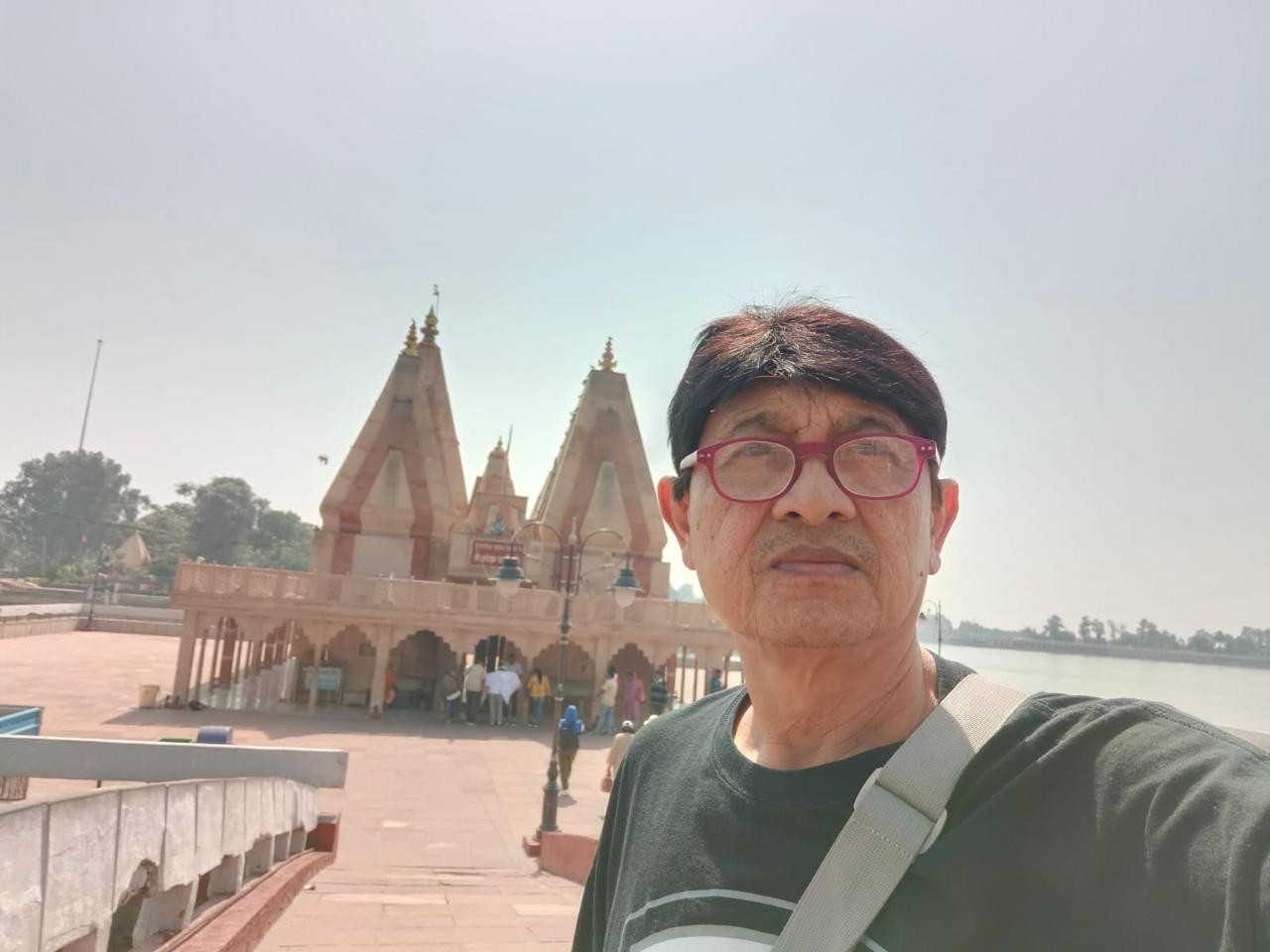
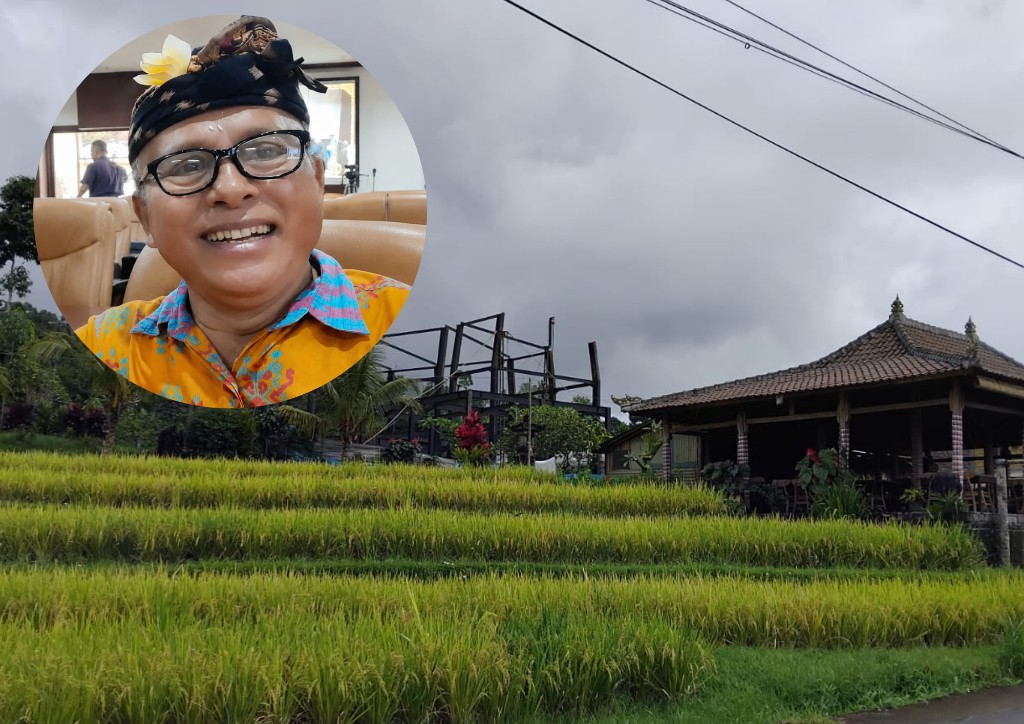
Denpasar (Atnews) - Putu Suasta, a Global Traveler and an alumni of Gadjah Mada University (UGM) and Cornell University, stated that the progress of civilization and the influence of globalization has penetrated almost all aspects of human life.
The speed of modernity, the use of Artificial Intelligence (AI) in various ways of life, is not without risks. Many things are replaced, and many things are ‘Extinct.’
Among them, the most impactful is language. The progress of civilization has had the impact of eroding and scorching standard regional languages in various parts of the world. Many regional languages have died and are dying because their supporters are starting to abandon them due to the onslaught of information technology and the expansion of media networks.
However, it is important to know that Sanskrit is a complex, systematic and the oldest language but still survives in the world in the period of 2000 years. The Sanskrit word meaning ‘subtle’ or ‘refined,’ for instance, is an antonym of prakrita, meaning ‘natural,’ or ‘vulgar.’
It consists of primordial sounds, and was developed systematically to encompass the development of natural sounds created in the human mouth. Sanskrit is considered as ‘Dev Bhasha,’ ‘Devavani’ or the language of the Gods by ancient Indians.
There are a total of 54 letters in the Sanskrit alphabet. Each of which has masculine and feminine form, namely shiva and shakti, 54 times 2 is 108.
It is also stated that Sanskrit is the mother of all higher languages. It has helped shape many European languages including French, German, Russian, and English.
It shows many forms of ancient words such as father, via, trigonometry, and mice, while guru, pundit, dharma, and yoga are among the hundreds of Sanskrit words that can now be found in the Oxford dictionary.
It is the earliest and only Modern Language known by Panini (circa 400BC), in his Astadhyayi, providing rules and definitions of formal production to describe Sanskrit grammar.
Starting with about 1700 basic elements, such as nouns, verbs, vowels, and consonants, he put them into classes. Sentence construction, compound nouns, et cetera are described as ordered rules that operate on an underlying basic structure.
This aligns with the basic ideas of terminal, non-terminal usage, and production rules of modern Computer Science. Based on less than 4,000 sutras (rules expressed as aphorisms), he constructed almost the entire structure of Sanskrit.
Sanskrit from India has the strongest influence on Indonesian languages. It is an ancient language of South Asia, which is the Indo-Aryan branch of the Indo-European language family.
This language has also greatly influenced modern Indian languages. So, this Sanskrit is used in several major literary works in Bharatavarsa (India), namely the Vedas, Ramayana Mahabharata.
Sanskrit spread to various regions and reached Indonesia around the beginning of the 4th or 5th century, after being brought by priests from India. This is proven by the development of ancient Hindu-style kingdoms in Indonesia, such as Kutai, Tarumanegara and Ancient Mataram.
The relics from this ancient kingdom are in the form of several inscriptions written in Sanskrit. Even though it was once used by Hindu kingdoms in Indonesia, Sanskrit began to be abandoned around the 14th century. It happened due to the collapse of the Hindu kingdom, which was replaced by an Islamic kingdom.
However, the Sanskrit language used in Indonesia, especially for institution mottos also has very strong Indian elements, for example the motto of the Indonesian Military Academy which reads Adhitakarya Mahatvavirya Nagarabhakti which means ‘a cadet or officer achieves science and knowledge by prioritizing the spirit of a warrior and patriot to serve the country’ comes from an ancient Indian proverb.
This also proves how strong the Indian element is in Indonesia from all kinds of aspects, especially in language use.
In Indonesian, it is estimated that there are around 800 words from Sanskrit. Some of these words were absorbed directly from the original language, but many were also absorbed from Javanese or Old Javanese. Those absorbed from Javanese are often used to form new words and are called neologisms.
Therefore, it is not impossible that Balinese, one of the regional languages in the world, could suffer a similar fate. Neglect of parents, education and lack of government attention can accelerate the death of the Balinese language. This phenomenon occurred around the 1980s and 1990s. Many Balinese families were switching to Indonesian in their daily communication. Moreover, these symptoms still occur today.
But gradually the trend changed. This is more or less influenced by changes in the political situation. The euphoria of openness since 1998 has given people many choices and freedom in determining attitudes, stances and creative cultural choices. A number of people and institutions are starting to think about the fate of the Balinese language. Their movement was initially driven by global anxiety about how many regional languages in the world were becoming extinct.
For this reason, the Indian Council for Cultural Relations (ICCR), New Delhi and the I Gusti Bagus Sugriwa State Hindu University Denpasar (UHN IGB Sugriwa Denpasar) held a Memorandum of Understanding (MoU) for the Sanskrit Academic Chair.
The MoU was signed by the Consul General of India in Bali, Dr. Shashank Vikram and Chancellor Prof. Dr. I Gusti Ngurah Sudiana, in Denpasar, Thursday (May 16). The signing procession was held at the office of the Consulate General of India, Bali in Denpasar, witnessed by academics, representatives from government institutions, cultural figures, media personnel and the Indian diaspora in Bali.
On that occasion were present Ida Rsi Putra Manuaba and Prof Wayan Dibia who were awarded the Padma Shri Award 2020 by the President of India. At the same time, the Consul General expressed his gratitude to the ICCR and the Chancellor of UHN IGB Sugriwa Denpasar for realizing the establishment of the ICCR academic chair.
He highlighted the role of Sanskrit in the development of Balinese language, religion, art, architecture and philosophical views which marked a significant relationship between India and Indonesia. Thus, the Balinese language has Sanskrit roots. So, to preserve the Balinese language, people are expected to understand Sanskrit.
Previously, a political momentum determined the movement to revitalize the Balinese language when I Wayan Koster was appointed as Governor of Bali on September 5, 2018. He realized how important the Balinese language is as an entity of the Balinese people and the depth of the philosophy contained in it. So, to revitalize and preserve the Balinese language, Governor Koster issued Gubernatorial Regulation No. 80/2018 concerning the Protection and Use of Balinese Language, Script and Literature and the Implementation of Balinese Language Month.
Gubernatorial Regulation No. 80/2018 was inaugurated on October 5, 2018 in a simultaneous form using Balinese script. In accordance with the Gubernatorial Regulation, office and public facility signboards in Bali use Balinese script over Latin scripts. Several office locations and public facilities at the provincial level to the village level have been determined as the inauguration venue. At the provincial level, it is centered at I Gusti Ngurah Rai Airport and the Office of Bali Governor.
The implementation of the Gubernatorial Regulation on the Use of Balinese Language and Script, even though it has only been made mandatory for government agencies, has received an enthusiastic response from some Balinese people. This can be seen from social media such as Facebook and the younger generation in banjars (hamlet) and secondary schools in Bali. On social media, for example, they report all activities and creative creations that use Balinese through social media posts. And it also appears that several stories in Balinese language and scripts are being posted on social media.
The policy of Bali Provincial Government of issuing a Regional Regulation on the use of Balinese language and script has a significant influence, especially in the area of creative work. Moreover, the Bali Provincial Government includes the Balinese language in various cultural activities within the jurisdiction of government.
At the Bali Arts Festival 2019, for example, for Balinese language activities was held a creative writing competitions, writing and reading palm-leaf manuscript as important events in the mission to revitalize the Balinese language. Outside of government, the local government in Bali also often supports all activities carried out by individuals and cultural institutions related to the Balinese language.
Meanwhile, at the peak of the commemoration of International Mother Language Day (IMLD) 2023 on February 21, 2023 at UNESCO Headquarters in Paris, Indonesia became a joint committee with UNESCO and Francophonie. The theme raised at the IMLD 2023 commemoration was ‘Protecting Local Languages to Promote Multilingualism through Educational Transformation.’
This activity was officially opened by the Assistant-Director General of UNESCO, Stefania Giannini. At the opening session, the Minister of Education, Culture, Research and Technology of the Republic of Indonesia, Nadiem Anwar Makarim, shared good practices by explaining the policy of protecting regional languages through the Merdeka Belajar or Freedom to Learn platform in episode 17: Revitalizing Regional Languages (MB-17: RBD) carried out by Indonesia.
The Minister of Education, Culture, Research and Technology stated that the Ministry is responsible for the development and cultivation of regional languages in Indonesia and has initiated an innovative approach to preserving regional languages. It is not only aimed to preserve regional languages, but also to initiate linguistic revitalization as well as expand their use in public life in line with developments in the modern world.
Meanwhile, the Head of Development Agency and Language Development, E. Aminudin Aziz, who was the main panelist, conveyed the implementation of the MB-17: RBD platform having been launched by the Minister of Education and Culture.
The Head of the Language Agency conveyed nine main principles as a reference for the implementation of revitalization, namely (1) focusing more on the idea of revitalization through continuous learning and direct supervision; (2) intensive participation of all stakeholders from the planning to implementation stages by requiring the use of regional languages in the family, community and school domains; (3) adoption of various revitalization models adapted to local contexts and circumstances; and (4) providing story books for children in regional languages for learning enrichment purposes.
Then, the other principles are (5) the use of regional languages as an introduction to education in the early grades; (6) freedom to choose learning materials according to interest of students; (7) mobilization of teachers and facilitators as well as language and literature activists; (8) providing an appreciation space at the end of the program in the form of a mother tongue festival (FTBI); and (9) gradually increasing the number of provinces and languages to be revitalized.
Specifically for the third principle, there are three models of regional language revitalization with the following considerations, namely (1) linguistics and situational context which includes language vitality (from safe to extinct), number of speakers, and language function in society; (2) method of inheritance from generation to generation; and (3) the status of the language in the curriculum, namely mandatory as local content or not part of the curriculum.
After considering all the principles and implementation models, the next step according to the Head of the Language Agency is (1) selecting a regional language to be the target for revitalization; (2) outreach to representatives or figures who speak the selected regional language; (3) coordination with local authorities; (4) training for master teachers and instructing teachers, attended by regional language teachers, school principals, supervisors and regional language activists; (5) implementation of relevant models through learning activities; (6) routine monitoring and evaluation; and (7) festivals in stages from district, provincial and national levels.
In his presentation, the Head of the Language Agency also conveyed the success of the MB-17: RBD program in 2022 based on quantitative data involving a number of school principals, supervisors, teachers, language and literature activists, and students in regional language revitalization activities in 13 provinces in 2022.
In the meantime, Putu Suasta also revealed that there is an institution outside the government that really cares about the existence of the Balinese language. What is meant is BASAbali with its official website basabali.org. This institution is not moving because of the decision of Bali Provincial Government with Gubernatorial Regulation No. 80/2018, but long before the institution had been operating among the Balinese people who did not really care about their language. Driven by a serious intention to preserve the Balinese language, this institution moves quietly within its limitations.
They continue to collect Balinese on their website, connect many people who think they understand Balinese, look for their own funding which is often not much, but their great and serious intention to preserve the Balinese language does not stop their work, fighting to keep it as much as possible for Balinese language.
Their efforts eventually received attention from the public and educational institutions, until they received an international award from Linguapax, an institution established by UNESCO based in Spain. The award itself was handed over directly by the President of the Linguapax Council on Saturday (December 1, 2018) at Agung Rai Museum of Art (ARMA), Ubud, Gianyar.
The mission of BASAbali is very simple, namely to maintain and preserve Balinese culture by keeping the Balinese language relevant in the digital era. Those who drive this mission do not work alone. They seek to involve the community in using Balinese on social media, at school, at home, in public spaces in Bali and contribute to the development of free resources. On that account, this resource becomes a ‘medium’ to get people involved and it also serves to provide Balinese language and culture materials.
BASAbali activists know that times are no longer the same as before. There are very significant changes having occurred at this time. Therefore, the riches of the past, among which the most important, urgent and very valuable is language, which in this case is Balinese.
For them, BASAbali activists, there is an urgent need to change the way regional languages are valued and used today, while there is still a strong base of language speakers. Because for this ‘custodians of the Balinese language,’ the world is developing unstoppably and we must always look for developing ways to bring the riches of the past to present today.
Because they have worked so long, driven by cultural calling and consistency with their integrity in preserving and developing the Balinese language, it is not surprising that many people are moved to provide moral, intellectual and financial support. More amazingly, many have volunteered for years for this mission of protecting, caring for and preserving the Balinese language. Hundreds of volunteers also work because of a cultural calling, a moral and intellectual awareness of this very meaningful mission.
Now, in their better existence, these ‘custodians of the Balinese language’ are more detailed in determining their programs, more measurable on a time scale and wider in their target range in preserving and developing the Balinese language in the coming years. In addition to their more regular work on the wiki, they started three programs over a five-year period. The three programs are as follows: (1) To improve Balinese language skills in Bali by developing Balinese superheroes with the community and developing books and other digital materials featuring superheroes as they face social dilemmas and seek advice from the community;
(2) To develop a history of the Balinese people in Balinese that engages students throughout Bali to visually record stories from their elders and themselves who talk about important events such as art, medicine and other unique aspects of their society. These videos will be published and stored on the wiki and translated into Indonesian and English and linked in other parts of the wiki; (3) To encourage the tourism industry to embrace Bali by using Balinese in tourism companies.
Seriousness of BASAbali Wiki about maintaining, developing and preserving the Balinese language inevitably requires funds that are no longer small. According to wiki prospectus of this year, they need $150,000 per year to hire three full-time staff (executive director, assistant and social media director; hire a team of senior and junior linguists, editors, social media experts and translators (approx. 30 consultants), paying accountants, programmers, servers and others.
Apart from internal funding for their institutional movement, the wiki activists also need project-specific funding to help with literacy, history and tourism projects. For this purpose, the wiki also has details contained in their website. Therefore, in order to fulfill the funding, they want, wiki is trying to find 15 founding partners who can commit $10,000 per year, each guaranteed for the next five years to achieve their program goals in maintaining, preserving and developing the Balinese language.
Like it or not, management is needed in the development of big things as well as in the work of keeping the Balinese language alive, maintained and dynamic in this digital era. Wiki, with the prospectus published to the public, shows the seriousness of their work in a managerial, structured and measurable manner. Moreover, responsibilities to the public are still carried out openly.
However, the unprecedented speed and socio-economic pressure, the increasing pressure of new values, the increasing dominance of a number of international languages, have made the existence of regional languages in the world, including Balinese, very vulnerable. Without serious and massive cultural awareness efforts, it can be imagined what will happen immediately.
Therefore, the movement of Wiki to position them as serious activists in maintaining, preserving and developing the Balinese language deserves serious appreciation as well.
Apart from the awareness of the community of speakers, which in this case are the Balinese people, the wiki together with the Balinese people, are the true ‘custodians of the Balinese language.’ This good example needs to be imitated by other regions to preserve the richness of the regional languages of this archipelago. (GAB/001)
Nalanda University Bihar India Celebrates 1600 Years of Transformation
DENPASAR (Atnews)---Humanist Putu Suasta considers the transformation of Nalanda University as the oldest model of the world in terms of boarding education as a symbol of academic heritage of India and dynamic global cultural exchange.
The new campus of Nalanda University in the state of Bihar was inaugurated by Prime Minister Shri Narendra Modi in Rajgir, Bihar, Wednesday (Jun 19).
The university was built as a result of collaboration between India and the East Asia Summit (EAS) countries. Several prominent figures including the Heads of Missions from 17 countries attended the inauguration ceremony. Prime Minister Modi also planted trees as a symbol of growth and transformation.
At the inauguration of this international university, apart from India, 17 other countries also participated, namely Australia, Bangladesh, Bhutan, Brunei Darussalam, Cambodia, China, Indonesia, Laos, Mauritius, Myanmar, New Zealand, Portugal, Singapore, South Korea, Sri Lanka, Thailand, and Vietnam.
Those countries have signed MoU to support the University. A total of 137 scholarships are available for international students. This includes scholarships sponsored or funded by the ASEAN-India Fund, BIMSTEC scholarships and Bhutan Scholarships by MEA. It offers Postgraduate and Doctoral research courses as well as short-term certificate courses. Also present on that occasion were the Governor of Bihar, Shri Rajendra Arlekar, Chief Minister of Bihar, Shri Nitish Kumar, Union Minister of External Affairs, Dr. Subrahmanyam Jaishankar, Union Minister of State for External Affairs, Shri Pabitra Margherita, Deputy Chief Ministers of Bihar, Shri Vijay Kumar Sinha and Shri Samrat Choudary, Chancellor of Nalanda University, Prof. Arvind Panagariya, and Vice Chancellor of Nalanda University, Prof. Abhay Kumar Singh along with other dignitaries.
According to Suasta, who is also an alumnus of Gadjah Mada University (UGM) and Cornell University, Nalanda University is an example of the modern campuses like the University of Bologna in Italy, the University of Oxford in Great Britain as well as Cornell University in New York, United States of America.
The university has a deep connection with history. The original Nalanda University, founded around 1600 years ago, is considered one of the first residential universities in the world. The Nalanda ruins were declared a UN Heritage Site in 2016.
The campus was founded during the Gupta Dynasty at the end of the 5th and early 6th centuries AD, supported by the Gupta King named Shakraditra. This institution was able to survive for 600 years until the reign of Pala Dynasty and was finally destroyed in 1203 by the Muslim invasion from Turkey. In 1204, the last abbot of Nalanda, Shakyashribhadra, fled to Tibet.
Nalanda University has become the largest center for Buddhist education in India in its time. More than 30,000 monks, including 2,000 teachers, lived there, studied and practiced in the university.
Nalanda is famous throughout the world as a center for high level education having students from Korea, Japan, China, Tibet, Indonesia, Turkey, Greece and Persia.
Even though Buddhadharma is the main subject, Nalanda also offers the studies of various other subjects, such as: astronomy, medicine (Ayurveda), grammar, metaphysics, logic, philosophy of language, classical Hindu philosophy, and even non-Indian philosophies. Subjects taught here included religion, history, law, linguistics, medicine, public health, architecture, metallurgy, pharmacology, sculpture and astronomy.
Famous scholars who studied at Nalanda include Harshavardhana, Vasubandhu, Dharmapal, Suvishnu, Asanga, Dharmakirti, Shantarakshita, Nagarjuna, Aryadeva, Padmasambhava, Xuanzang (the famous founder of Buddhism in Tibet) and Hwui Li. Shilabhadra (Silavadra) was the Chinese teacher or monk Hiuen Tsang during 645 AD. He came from Comilla, Bangladesh.
What is even more interesting is that the relationship of the campus with Indonesia dating back to the Srivijaya era.
Suasta explained that this good relationship was realized by student exchanges between the Srivijaya Kingdom and Nalanda University, which has been a center for Buddhist education since around the 5th century AD.
Then, the Srivijaya Kingdom began sending Prince Dharmakirti to study Buddhism in Nalanda. Having finished, he returned to teach at Srivijaya. Meanwhile, the Pala Kingdom (India) also sent Atisa Dipamkara to study Buddhism in Srivijaya.
After 12 years of living and studying with Dharmakirti in Srivijaya, Atisa returned to the Pala Kingdom. He also became one of the leading Buddhist teachers.
According to the notes by I-Tsing, a Chinese monk, around the 7th century AD there was a Buddhist college in Srivijaya, which had more than 1,000 monks from various regions. The monks studied Buddhism and studied Sanskrit in Srivijaya, before finally studying Buddhism in Nalanda.
It is also revealed in the Nalanda Inscription found in 1921 in Bihar, Nalanda, India. The inscription describes King Devapaladeva from the Palla Kingdom, India. It is said that King Devapaladeva granted the request of Sri Maharaja of Svarnadvipa or Srivijaya to build a Buddhist monastery in Nalanda.
The inscription also states that five villages in Calcutta (currently Kolkata) India were exempt from taxes for the purposes of Buddhist missions in the Srivijaya Kingdom. On that account, the campus can once again strengthen the diplomatic relations of Indonesia with India, which is entering its 75th year.
Moreover, Indonesia will have Indonesian President Prabowo Subianto in 2024 who will continue the leadership of President Joko Widodo with India having a Hindu leader as Prime Minister Modi for the third time.
The commitment of India to strengthening its plans for ‘Amrit Kaal’, a period of massive national transformation that will lead to ‘Viksit Bharat’ or advanced India by 2047. Hopefully, this will provide inspirations for Indonesian leaders in realizing a Golden Indonesia 2045.
The cooperation in the education sector between Indonesia and India is expected to be increased to advance human civilization towards peace. Campuses in Bali in particular are expected to be able to collaborate with Nalanda University.
The Nalanda University campus has two Academic Blocks with 40 classrooms with a total seating capacity of around 1,900. It has two auditoriums with a capacity of 300 seats each, a student hostel with a capacity of around 550 students and various other facilities including an International Center, an Amphitheater which can accommodate up to 2,000 people, including the Faculty Club and Sports Complex.
This campus is a ‘Net Zero’ Green Campus. It is Sustainable with a solar power plant, domestic and drinking water treatment plants, a water recycling plant to reuse waste water, 100 hectares of water bodies, and many other eco-friendly facilities.
In advancing Indonesia towards golden generation of Indonesia in 2024, the key is human resource development through education. However, Bali only has upper secondary level education at a boarding house in Buleleng which is a legacy of the Governor of Bali for the 2008-2018 period, Made Mangku Pastika, namely Bali Mandara High and Vocational School.
Meanwhile, there is no Nalanda University model boarding campus yet. This is the dream of the Balinese people in creating human resources that are ready to compete globally. Nalanda University has been proven to produce clergy, great academics and politicians for the glorious kingdoms of its time.
“The 20 percent of State Budget and Regional Budget for education regulated by the constitution can be seriously optimized,” said Suasta, who has traveled around India and even visited large Hindu campuses in the land of Bharatavarsa.
Suasta has learned a lot from India, and has even traveled to the country seven times within more than 30 years. He even lived in holy places for Hindus, namely Punjab, Varanasi, also called Benares, or Benaras, or Kashi or Kasi, known as a holy city of Hinduism on the banks of the Ganges River, located in the state of Uttar Pradesh in northern India.
Varanasi, for Hindus, is like Mecca for Muslims or the Vatican for Catholics. While in India, Putu Suasta socialized with saints or sadhus.
Suasta also undertook a spiritual journey to India (Bharat) specifically visiting the holy sites of Jyotisar, Kurukshetra in the state of Haryana, North India. It also included visiting Akshardham which is a Hindu temple complex covering approximately 200 hectares on the outskirts of metropolitan Delhi, India and so did the Ganges River in Haridwar, Rishikesh and Mathura.
Likewise, he already visited Angkor Wat in Siem Reap, Cambodia, a Hindu temple complex covering an area of 100 square km built years ago. He also visited the Batu Caves Hindu Temple in Malaysia some time ago.
In his speech, the Prime Minister quoted via the narendramodi.in website expressed his joy and thanked him for his good fortune in visiting Nalanda within 10 days of taking oath as Prime Minister for a third term and stated that this was a positive indication of development journey of India.
“Nalanda is not just a name, but an identity, an honor. Nalanda is the root, that is the mantra. Nalanda is a proclamation of the truth that knowledge cannot be destroyed even if books burn in fire,” the Prime Minister exclaimed. He underlined that the establishment of the new Nalanda University would usher in golden age of India.
The Prime Minister further added that revival of Nalanda near its ancient ruins will introduce capabilities of India to the world as it will tell the world that countries with strong human values are capable of creating a better world by rejuvenating history.
Shri Modi emphasized that Nalanda carries the heritage of the world, Asia and many countries and its revival is not limited to the revival of the Indian aspect alone. This can be seen from the presence of so many countries at the inauguration today, he added, recognizing the contribution of friendly countries in the Nalanda project. He also praised the people of Bihar for their determination to restore its glory as reflected in Nalanda.
Pointing out that Nalanda was once the center for Indian culture and traditions, the Prime Minister stated that the meaning of Nalanda is the continuous flow of knowledge and education and this has been an approach and thinking of India towards education.
“Education goes beyond borders. It inculcates values and thoughts while shaping them,” said the Prime Minister, while highlighting that students are admitted to the ancient Nalanda University regardless of their identity and nationality. He also emphasized the need to strengthen the same ancient traditions at the newly inaugurated Nalanda University Campus in modern form.
The Prime Minister declared his happiness that students from more than 20 countries have studied at Nalanda University and added that it is a perfect example of ‘Vasudhaiva Kutumbakam.’
The Prime Minister highlighted the tradition of India treating education as a tool for human welfare. He touched on the upcoming International Yoga Day and stated that Yoga Day has become an international festival.
Furthermore, he added that despite developing so many types of Yoga, no one in India can claim a monopoly on Yoga. Likewise, India shares Ayurveda with the rest of the world, he stated.
PM Modi also underlined the devotion of India towards sustainability and explained that in India, his government has brought progress and environment together. This allows India to deliver on initiatives such as Mission LiFE and the International Solar Alliance.
He mentioned that the Nalanda Campus with its pioneering models of Net Zero Energy, Net Zero Emission, Net Zero Water and Net Zero Waste would prioritize the spirit of sustainability.
The Prime Minister emphasized that educational development leads to the deepening of economic and cultural roots. This is proven by global experience and the experience of developed countries. “India, which is working to achieve its goal of becoming a developed country by 2047, is transforming its education system,” the Prime Minister said.
He further added that his mission is for India to become a center for education and knowledge of the world. The mission is for India to once again be recognized as the foremost knowledge hub of the world. He noted initiatives like Atal Tinkering Labs which serves over a crore children, the interest in science generated by Chandrayaan and Gaganyaan, and Startup India which generated 1.30 lakh startups in India since several hundred and 10 years ago. He noted the number of patents and research papers and research funding has reached 1 lakh crore.
The Prime Minister highlighted the efforts of his government to create the most comprehensive and complete skills system and the most advanced research-oriented higher education system in the world. He mentioned the improving performance of Indian universities in global rankings. Highlighting recent achievements in the field of education and skill development within the last ten years, the Prime Minister mentioned the increased in the number of Indian educational institutions from 9th to 46th in the QS Ranking and 13th to 100th in the Times Higher Education Impact Ranking. In the last 10 years in India, the Prime Minister informed that one university has been established every week, a new IIT has been established every day, Atal Tinkering Lab has been opened every third day, and two new colleges have been established every day.
He further added that India currently has 23 Indian Institutes of Technology (IITs), the number of Indian Institutes of Management (IIMs) has increased from 13 to 21 and the number of All India Institutes of Medical Science (AIIMS) has almost tripled to 22. “In 10 years, the number of medical colleges has also almost doubled,” he said.
Touching on reforms in the education sector, the Prime Minister mentioned the New Education Policy and stated that it has given a new dimension to the dreams of young generation of India. Shri Modi also mentioned the collaboration of Indian and foreign universities as well as the opening of new campuses of international universities such as Deakin and Wollongong.
“With all these efforts, Indian students are getting the best educational institutions in India for higher education. This also saves money for our middle class,” added PM Modi. Mentioning the recent opening of global campuses of leading institutions in India, the Prime Minister expressed similar hopes for Nalanda.
The Prime Minister underlined that the eyes of the world are directed on youth of India. “India is the country of the Buddha, and the world wants to walk shoulder to shoulder with the mother of democracy,” the Prime Minister continued.
“When India says One Earth, One Family and One Future, the world supports it. When India says One Sun, One World, One Power Grid, it is considered the way of the future for the world. When India declared One Earth One Health, the world respected and accepted their views ‘Nalanda Land can give a new dimension to this sense of universal brotherhood and Nalanda students are getting bigger,” PM Modi said.
Calling the students and scholars of Nalanda as the future of India, the Prime Minister underscored the importance of the next 25 years of Amrit Kaal and appealed to them to take the ‘Nalanda Way’ and ‘Nalanda values’ with them. He asked them to Be Curious, Courageous and Above All, Be Kind as per their logo and asked them to work for positive change in society. (GAB/001)
Baca Artikel Menarik Lainnya : Pengetasan Kemiskinan Berbasis Pembangunan Desa di Sumsel