Maha Kumbh Mela, the Largest Religious Festival on Earth
Admin - atnews
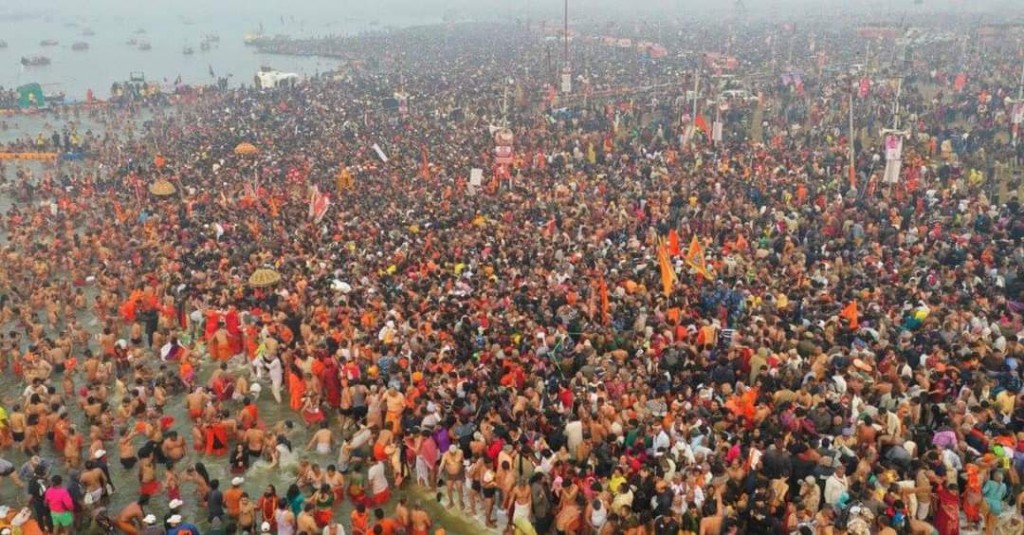
Denpasar (Atnews) — Putu Suasta, a Global Traveler, Founder of the NGO JARRAK, who is an alumni of Gadjah Mada University (UGM) and Cornell University, stated that the Kumbh Mela Celebration is the largest religious festival on Earth, where Hindus around the world will celebrate Maha Kumbh Mela that will take place from January 13, 2025 to February 26, 2025.
The last Maha Kumbh Mela was held in 2013, and the next Maha Kumbh Mela is scheduled for 2025 in Prayagraj. Kumbh Mela 2025 starts on Pausa Purnima day and will provide a once-in-a-lifetime experience for Hindus and tourists.
The four venues are Haridwar on the Ganges River (Uttarakhand), Ujjain on the Shipra River (Madya Pradesh), Nashik on the Godavari River (Maharashtra), and Prayagraj (Prayaga) at the confluence of the Ganges, Yamuna and Sarasvati rivers which are “invisible” (Uttar Pradesh). The determination of the ritual venue is based on the Hindu astronomical and astrological system.
Quoting information from a page that discusses a lot about Hindu rituals and traditions, jagranjosh.com, there are several types of Kumbh Mela, namely: 1) Magh Kumb Mela, held every year in the month of Magh only in Prayagraj; 2) Ardh Kumbh Mela, held every 6 years only in Haridwar and Prayagraj; 3) Purna Kumbh Mela, held every 12 years between the four holy venues. The determination of the venue is based on the position of the sun, moon and planet Jupiter; 4) Maha Kumbh Mela, held after 12 Purna Kumbh Mela or once every 144 years. The determination of the venue is the same as the procedure for Purna Kumbh Mela.
The tradition is an event that intrinsically encapsulates astronomy, astrology, spirituality, ritual traditions, and socio-cultural customs and practices.
This 12-year pilgrimage cycle is also called Māhā Kumbha Melā (Great Kumbha Mela), a Hindu festival also posing a gathering of the humanity of the world organized in one venue. Sadhus and Yogis who have meditated for decades descend from the Himalayas.
Vedic literature states that anyone who takes a bath in the Triveni-sangam at the auspicious time of Kumbha-mela is guaranteed freedom from birth and death. That is why Mela always attracts millions of pilgrims.
In the Ardh Kumbh Mela in Prayagraj in 2019, a total of 150 million tourists came from all over the world. This number is greater than the combined population of 100 countries.
Moreover, this festival is listed as an Intangible Cultural Heritage by UNESCO. The next Kumbh Mela, known as Maha Kumbh Mela, will be hosted by Prayagraj (Allahabad) in 2025.
Prayag refers to a venue where a great sacrifice is held. Long time ago, Lord Brahma chose a prime piece of land surrounded by three holy rivers: Ganga, Yamuna, and Sarasvati as the venue of sacrifice. The venue came to be known as Prayag.
In 1573 CE, the Mughal Akbar emperor built a large fort at the confluence of the three rivers and renamed the city as Ilahabas or Ilahabad, “city of God.” Since then, Prayag has been known as Allahabad.
The confluence of the three rivers is known as Triveni-sangam. Tri means “three,” veni means “interweaving,” and sangam means “union.” The dark blue and black Yamuna rivers flow swiftly into the white and gray Ganga rivers. The Sarasvati river flows underground.
Bathing in one of these sacred rivers is cleansing, but purification is said to increase a hundredfold where the rivers meet. Varaha Purana states: “In Prayag, there is Triveni. By bathing there, one will enter heaven, and by dying there, one will attain liberation. It is the king of all tirthas (pilgrimage shrines) and is beloved by Lord Vishnu.”
Lord Brahma has said: prayagasya pravesesu papam nasyanti tatksanam. “All sins are at once cleansed upon entering Prayag.” Many saints and sages have visited Prayag. They all spent time there during a pilgrimage tour.
The festival is a time for Hindu pilgrims to perform a ritual of cleansing their sins by soaking in holy rivers.
The Kumbh Mela is held after a gap every 12 years in Haridwar, Prayagraj, Nashik, and Ujjain. In 2025, Prayagraj (Allahabad) will host the next Kumbh Mela called Maha Kumbh Mela. The festival is also called Purna Kumbh. There is even the Ardh Kumbh, which is held every 6 years in Prayagraj and Haridwar.
If one makes sacrifices in Prayāga, he is sure to get immediate results without any difficulty.
Prayāga is also called Tīrtharāja, king of all pilgrimage destinations. This holy place is located at the confluence of the Ganges and Yamunā rivers.
Every year, a fair is held known as Māgha-melā, and every twelve years, Kumbha-melā is also held.
In any case, many people come to bathe there every year. During the Māgha-melā period, people from the local districts generally come, and during the Kumbha-melā period people come from all over India to stay there and bathe in the Ganges and Yamunā.
Anyone who goes there will immediately feel the spiritual influence of the place. A fort is located there, built by Emperor Akbar about five hundred years ago, and near the fort is a place called Triveṇī. On the other side of Prayāga, there is an old place known as Pratiṣṭhāna-pura.
Putu Suasta also stated that Kumbh Mela has been celebrated for centuries. The Prayagraj Kumbh Mela was first mentioned in 1600 CE.
Elsewhere, Kumbh Mela was held in the early 14th century. Kumbh Mela is a very sacred and religious festival and has a special significance for the sadhus and holy men of India.
According to him, Kumbh Mela has deep roots in Hindu literature. It is stated that during the fight between the gods and the asuras to obtain amrita (nectar of immortality), a few drops of nectar fell at four locations in India.
The origin of the festival is found in the Bhagavata Purana (Sangam or the sacred meeting venue of the holy Ganga and Yamuna rivers, the third river called the Saraswati River) in the medieval period.
In the Samudramantana section, it is mentioned in the Bhagavata Purana, Visnu Purana, Mahabharata and Ramayana that they had lost their powers due to the curse of Durvasa Muni, and to get it back, they approached Lord Brahma and Lord Shiva.
They begged and prayed to Lord Visnu in order to receive amrita (nectar of immortality) in Ksheera Sagara. They had to make a temporary agreement with the Asuras, to work together by sharing the results.
However, when the Kumbha (urn) containing amrita appeared, a fight ensued. For twelve days and twelve nights (equivalent to twelve human years), they fought in the sky and spilled the nectar of immortality or amrita from the amrita pot.
It is believed that during the battle, Lord Vishnu (incarnated as Mohini-Murti) flew away with the Kumbha of the elixir, spilling drops of amrita in four places: Allahabad (Prayag), Haridwar, Ujjain, and Nashik.
“So, the Devas and Asuras fought one another to win this nectar jug. And when Lord Vishnu took the form of Mohini Avatar, carrying away the Amrit Kalash (nectar jug), some drops fell in Haridwar, Allahabad, Nashik and Ujjain,” said Suasta in Denpasar, Monday (Nov 18).
Finally, Kumbh Mela was held in those venues to celebrate the festival. Another celestial event occurs during the Kumbh Mela, and that is the time when Jupiter is in the Kumbh (jug) Rashi, or Aquarius and the Sun enters the astrological sign Aries.
These cities now host the Kumbh Mela. The festival symbolizes the victory of good over evil and the spiritual power of these holy places.
The Rituals and Activities are 1) Snan (Holy Bath): Pilgrims believe that by bathing in the holy rivers during the Kumbh Mela, they will cleanse themselves of their sins and attain salvation; 2) Pujas and Homas: Religious ceremonies such as pujas and homas are performed to seek the blessings of the gods; 3) Religious Discussions: Many scholars and spiritual teachers gather to deliver lectures and hold discussions on Hindu teachings; 4) Akhara Meetings: Akharas are religious organizations led by sannyasis (ascetics). They play a vital role in the festival and hold grand parades as part of the event.
Meanwhile, in terms of social and cultural significance, the Kumbh Mela is not just about religious rituals, but also a platform for communities from all over India to come together, share knowledge and strengthen social ties.
The festival attracts millions of people from diverse backgrounds, creating a rich and colorful cultural mosaic.
Organizing the Kumbh Mela is a major logistical challenge. The local government works with various agencies to ensure a safe and smooth event, including the provision of health, sanitation, security and transport facilities.
In addition to its spiritual and social significance, the Kumbh Mela also has a significant economic impact. The festival attracts millions of domestic and international tourists, providing a major boost to the local economy through hospitality, transport and trade.
The Kumbh Mela is a reflection of rich spiritual and cultural heritage of India, a celebration that brings together millions of people from all over the world in a spirit of religiosity and brotherhood (GAB/001)

Baca Artikel Menarik Lainnya : Wagub Cok Ace Ajak Masyarakat Tetap Semangat Ngayah