Floods and Floods, Bali Fails to Manage Water
Admin - atnews
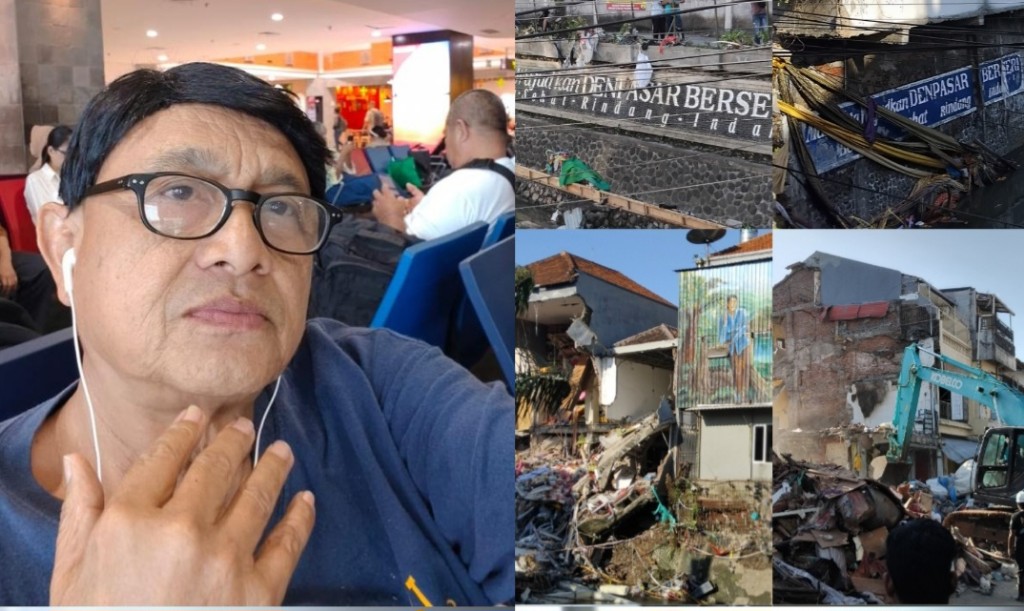
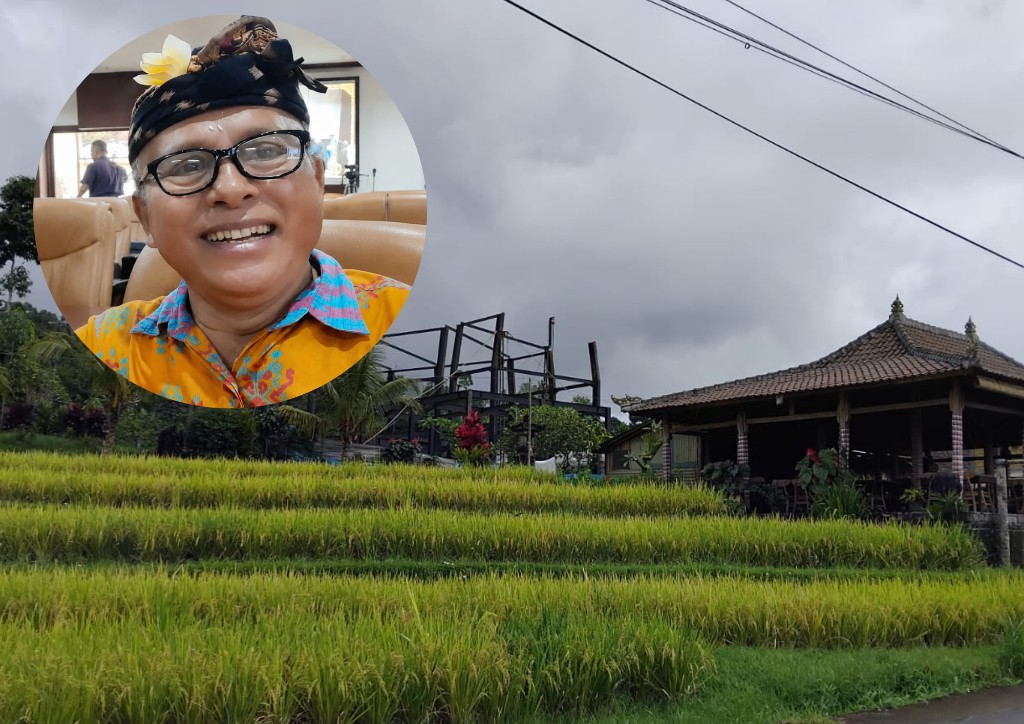
Jakarta (Atnews) - The founder of the Wisnu Foundation, Putu Suasta, who is also the patron of the JARRAK NGO, highlighted the flood disaster on the Island of the Gods, which coincided with the Pagerwersi holiday on Wednesday (Sep 10).
Suasta, an alumnus of Gadjah Mada University (UGM) and Cornell University, expressed his condolences for the victims of the disaster.
According to him, the floods occurred due to inadequate water management and massive spatial planning violations. The Bali House of Representative (DPRD) Special Committee for Spatial Planning, Assets, and Permits (Pansus TRAP) has even uncovered various development violations.
These mounting violations will have medium- and long-term impacts, including flooding. Furthermore, waste issues, clean water crisis, land conversion and development violations in the UNESCO-recognized Jatiluwih area have not been firmly addressed.
The floods in Bali will tarnish the image of tourism sector of Bali. Bali itself has previously been under scrutiny for its poor waste management amidst the Foreign Tourist Levy (PWA) policy.
Previously, the Australian government issued a level 2 travel warning for its citizens planning to travel to Indonesia, including Bali. This travel warning followed mass protests in several regions, including the demonstrations taking place in Bali on Saturday (Aug 30).
Moreover, ten countries have issued travel warnings. According to website of the Travel and Tour World, the countries issuing warnings for their citizens are Australia, Canada, the United Kingdom, the United States, Malaysia, Singapore, France, Japan, Germany, and New Zealand.
Furthermore, the Australian government also reminded its citizens on May 30 to be watchful when traveling to Indonesia, especially Bali.
Therefore, the government should be more sensitive in leading Bali. It should not simply proceed as it is, without fundamental breakthroughs and initiatives. Public trust will gradually erode if leaders of Bali operate without tangible actions that the Balinese people can feel.
Furthermore, tourism stakeholders and business owners, including investors, should also actively participate in addressing current developments. “Do not just be busy accumulating wealth and tourism dollars, while ignoring social action and the cries of the Balinese people for help,” he stressed.
Meanwhile, the public and netizens are urged to continuously follow existing regulations and have the courage to voice their conscience to policymakers. This effort ensures that policymakers do not arbitrarily implement regulations.
Similarly, it was explained the meaning of water for the Balinese! Water is a symbol of life and fertility. Culturally and spiritually, it is a manifestation of the Lord Vishnu, the god of water.
It maintains the life of the universe. Water is a central element in daily religious ceremonies for over 4 million Balinese, and it permeates the human life cycle from birth to death.
Since nearly 70 percent of population of Bali are farmers living in rural areas, water is the soul of Balinese life. According to the Tirtha religion, all water in Bali comes from all the lakes and rivers.
Ulun Danu Temple in Kintamani is located in the caldera system of Mount Batur. All rivers flowing southward of Bali originate from Ulun Danu, three lakes in the Tabanan and Buleleng districts, thus Balinese village culture always lines up side by side along these rivers.
In ancient literature and the palm-leaf manuscript of the Raja Purana Pura Batur, it is stated that entire subak or irrigation cooperative in Bali are required to worship and revere water.
Lake Batur, the largest lake among the four lake system of Bali is the center of orientation for the “Water Civilization.” Lake Batur and three other lakes are the source of the Water Civilization, whose rivers flow to the south and east of Bali. Lake Tamblingan is the source of rivers flowing to the north; while Lakes Buyan and Beratan are the source of rivers flowing to the west.
Along both banks of the rivers flowing southward, the Unda and Ayung, are villages where nearly 80 persons of the population subsists on rice cultivation. They are grouped into irrigation organizations called subak and other related organizations, called sekeha, and united by the bonds of the Kahyangan Tiga Temple system.
Balinese Hindu culture is ritually and culturally oriented and tied to a water belief system having existed for 2,000 years. The Balinese believe that all agricultural land and farmers are highly dependent on water and rivers as a blessing from the universe.
Unfortunately, the stability and sustainability of Balinese agriculture, with its subak system, are now threatened by the high and rapid growth of the tourism industry, especially in South Bali, which massively consumes a large portion of the water supply that should be used for agricultural activities. Clean water supply of Bali is actually quite sufficient if only to meet the needs of its three million-plus population.
However, it is not to meet the needs of tourism industry facilities using significant amounts of water, such as hotels, swimming pools, golf courses and hotel gardens, which are extremely water-hungry. Approximately 50,000 hotel rooms in Bali alone can use three million liters of water per day.
According to a 1993 estimate, Bali had used approximately 53 percent, or 319 cubic meters, of its 455 cubic meters of water supply per capita per year. A study conducted by Martopo in the same year predicted that Bali would begin experiencing serious water problems in the early 2000s.
As quoted by Atnews, Dr. Ketut Gede Dharma Putra, Chairman of the Bali Sustainable Development Foundation and a Balinese environmental researcher, expressed his hope that the World Water Forum (WWF) 2024 would truly deliver tangible benefits for water conservation in Bali.
The event should not be merely a ceremony that fails to significantly improve water status of Bali, moving from unsustainable to sustainable. It is not merely a ceremonial event that fails to impact water situation of Bali, moving from unsustainable to sustainable.
To that end, effective lobbying and critical strategies are needed from policymakers of Bali, as well as members of the House of Representatives (DPR) and Regional Representatives Council (DPD) in the Bali electoral district to ensure adequate funding for water resources of Bali.
A budget that optimizes water availability from natural ecosystems and natural resources of Bali, amounting to approximately 125,000 liters per second, would significantly help Bali overcome its water crisis.
It is estimated that water demand of Bali in 2025 is around 80,000 liters per second, which will be insufficient without an integrated water resource conservation program.
Based on the Ecosystem Services Index of Bali Province, which examines the relationship between the benefits and risks of water use, water status of Bali falls into the unsustainable category.
Residents of Badung District and Denpasar City are beginning to experience serious water shortages during the day and evening. The water supply of Municipal Waterworks (PDAM) has decreased sharply due to massive competition from the sprawling new residential areas and hotels in the tourist areas of Nusa Dua, Kuta, Seminyak, Kerobokan and Sanur. In areas such as Kuta, Legian, Sanur, and Mertasari, seawater has intruded as far as one kilometer from the coastline due to excessive water use, land conversion, shrinking protected forest areas, mangrove clearing, and the uncontrolled drilling of boreholes by hotels both large and small.
The development of a modern tourism industry certainly requires modern infrastructures and needs, such as airports, efficient transportation and communication systems, and human resources. International tourist visits have increased sharply.
In the 1970s, the government began development of the Nusa Dua tourist area project, covering an area of 425 hectares and housing 12 international-standard hotels with a capacity of 2,500 rooms.
To manage the area, the government established the Bali Tourism Development Corporation (BTDC). A 40-kilometer bypass road connecting the airport, Nusa Dua, Sanur, and Tohpati was built to facilitate tourist travel to rural areas in Gianyar and East Bali.
By 1996, the number of five-star hotels had increased to 10, with a total of 4,600 rooms. The Sanur tourism area, which had only 1,800 rooms between 1969 and 1974, now boasts more than 50,000 rooms, covering an area of 100 hectares. Kuta, in 1994, had 17,600 rooms, and now has an estimated 100,000.
These two very different orientations: tourism with its highways centered on the airport and agrarian-cultural tourism with its waterways centered on lakes and rivers, have collided, resulting in a prolonged environmental and socio-cultural crisis in Bali.
The construction of the airport highway connecting Nusa Dua with Sanur and Tohpati is responsible for the destruction of the mangrove belt along the Nusa Dua-Sanur coastal route. Land along this highway has become expensive and is being sought after for commercial development.
A critical Balinese magazine, Suara Bali, recently reported that the mangrove forest destruction in this area has reached 30-40 percent (546 hectares) of the estimated 1,373 hectares. Five institutions are considered primarily responsible: the Bali Public Works Agency (162 ha), CV Harapan (140 ha), PT Bali Turtle Island Development-BTID (81 ha), PLN (72.5 ha) and PT BTDC (32 ha).
“The mangrove forests have been converted into housing projects, tourism industries, shrimp farms, government facilities, shops, and landfills,” he said.
The direct impacts of the clearing of mangrove forests are: 1) Intrusion of seawater as far as one kilometer inland which cuts coconut trees, Banyan trees and other vegetation along the mangrove belt. If clearing is not stopped immediately, seawater intrusion is feared to reach five kilometers and getting rid of habitat for shorebirds and marsh birds. The loss of various types of crabs, shrimp and marsh shellfish will have a negative impact on the life of the coastal ecosystem; 2) Increasingly severe coastal abrasion. On a larger scale, Bali has experienced severe, systematic and massive damage to its beautiful coastline. Along 55 km of the existing 430 km of coastline has been severely damaged. And to date, only 24 km have received attention for rehabilitation. This systematic damage is caused by unclear regional planning; greedy investors and businesspeople motivated solely by profit without regard for the social and natural environment; and the mentality of officials acting as middlemen (brokers) who release public property that should be protected for the benefit of the Balinese public into the hands of greedy investors.
Bali will experience a water crisis starting in the 2000s. As previously stated, Bali has used almost 53 percent of its clean water supply. Technically, Bali is already on the brink of a water crisis. With a continuously growing population, the average Bali population is now five times the national average. Coupled with the ever-increasing number of hotels, the water problem will only continuously worsen without being addressed seriously. An average Bali family uses approximately 100 liters of clean water per day, while a tourist in a luxury hotel uses twice that amount. Based on the 15,000 luxury hotel rooms, tourists will spend 3 million liters of water per day is equivalent to the amount used by 30,000 Balinese families.
Previously, only urban Bali residents experienced water problems. Now, water problems have spread to rural and agricultural areas as urban expansion not only consumes land but also blocks water sources and channels.
Badung District in South Bali, with a population exceeding 300,000, is feared to experience serious water problems heading into 2003. Currently, the Badung Municipal Waterworks (PDAM Badung), the local water supply company, can only produce around 1,210 liters of clean water per second, while consumption has reached 1,700 liters per second—a shortfall of approximately 500 liters per second.
Badung District is facing difficulties not only in pumping or lifting water from its source in the steep northern area but also in securing funding.
Furthermore, the Badung River, the largest river of the district, is already partially utilized to meet the needs of the Nusa Dua tourist area and Jimbaran. The Municipal Waterworks faces two major problems: dwindling groundwater supplies and water use conflicts with wetland agricultural organizations (subak) in the area.
On one occasion, the Director of the Badung Municipality Waterworks told me that Badung must find new water sources, including collaborating with other districts.
Recently, a group of subaks in the northern part of Badung District protested against the Municipality Waterworks by cutting water pipes of the company. The farmers were unable to hold their anger because their rice fields were drying out. They felt to have been exploited by city dwellers. On that account, it is even more urgent for the Municipality Waterworks to devise new strategies to continue supplying clean water to urban homes.
One of the strategies that could be implemented is to immediately collaborate with other districts, of course, taking into account economic compensation. Badung, which has the highest regionally generated income (PAD) in Bali, approximately IDR 3 trillion per year, certainly able to purchase some of its water needs from other districts such as Tabanan, Gianyar and Klungkung.
Several areas in Bali—such as the rain shadow areas in the north and northeast—frequently experience drought, resulting in crop failures and food crises. A survey conducted by the Manikaya Kauci Foundation in 1998 found that in Karangasem District (East Bali) there were 13 villages experiencing a food crisis (approximately 860 families); in Bangli (also East Bali) approximately 7 villages (206 families), and in Buleleng (North Bali) approximately 10 villages (640 families).
Demographic pressures in Bali
The land area of the island is only about 5,630 square kilometers, or 0.3 percent of land area of Indonesia. In the early 1980s, the population density in Bali was 444 people; by the mid-1980s, it had risen to 476, equivalent to that of Java.
Since then, the population has continued to increase, especially in the South Bali area, such as in Denpasar City and Badung District. By 1999, the population density in Badung had reached 1,200 people per square kilometer, with an urbanization rate of approximately 26.5 percent. The overall density of Bali was five times the national average.
The increase in population density in Bali, particularly in Badung District, was directly driven by the development of the tourism industry, which requires supporting infrastructure such as roads, telecommunications, electricity and shopping facilities. Shopping facilities alone employed at least 50,000 workers, most of whom came from other islands, especially Java.
Because these workers needed housing or lodging, housing development projects sprang up along the roads and highways, ultimately centering on the airport.
This proliferation of housing had the following impacts: An increasingly heterogeneous population, both in terms of occupation/profession, region of origin/ethnicity, religion, and lifestyle. The increasing conflict between local residents and newcomers living in housing adjacent to villages (customary villages), as recently occurred in Denpasar, is fueled by a lack of mutual respect between Balinese and newcomers, and by the erosion of local customary rules, which cannot be fully enforced on an increasingly pluralistic population.
The loss of fertile rice fields in Badung and other districts has been directly followed by the disappearance of traditional organizations such as subak and others, and their various manifestations, because the loss of land means the loss of a platform for these organizations to express themselves.
Farmers who have sold or been forced to sell their land have changed professions, becoming employees of private companies or traders—a situation that is unsettling for those unfamiliar with such conditions.
Many subak temples remain abandoned; an estimated 500 exist in the districts of Badung, Denpasar, and Gianyar, which can only be interpreted as a form of cultural erosion. On August 12, 2000, the Bali Post newspaper conducted a telephone survey to gauge public opinion on various issues surrounding population issues in Bali, such as the increasing number of immigrants to Denpasar City and Badung District.
The following is a summary of the responses from 250 respondents to the five questions asked: Do you believe it is necessary to create a regional regulation (Perda) that regulates or limits the flow of immigrants from other islands to Bali? Over 97 percent stated that a regulation is necessary; only 3 percent said no. Do you believe it is necessary for Bali to issue a form of KIMS (Temporary Residence Permit Card) to immigrants that requires a specific extension for a specific period? Nearly all but 99 percent agreed that KIMS is necessary. (GAB/001)
Baca Artikel Menarik Lainnya : Turis Tiongkok Berkurang ke Bali pada Imlek 2019