Leadership of Modi Inspires World Hinduism and Digital Civilization
Admin - atnews
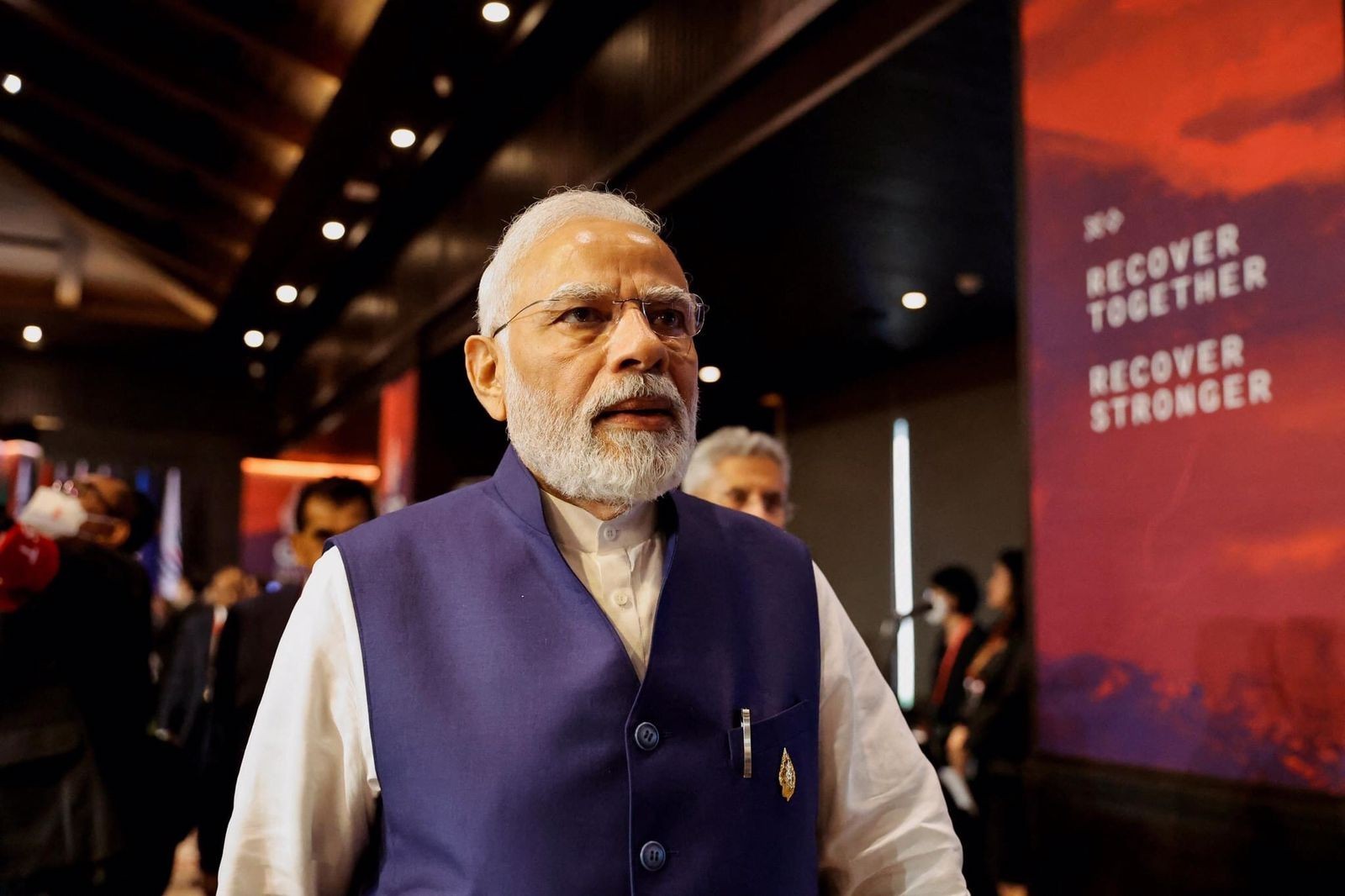
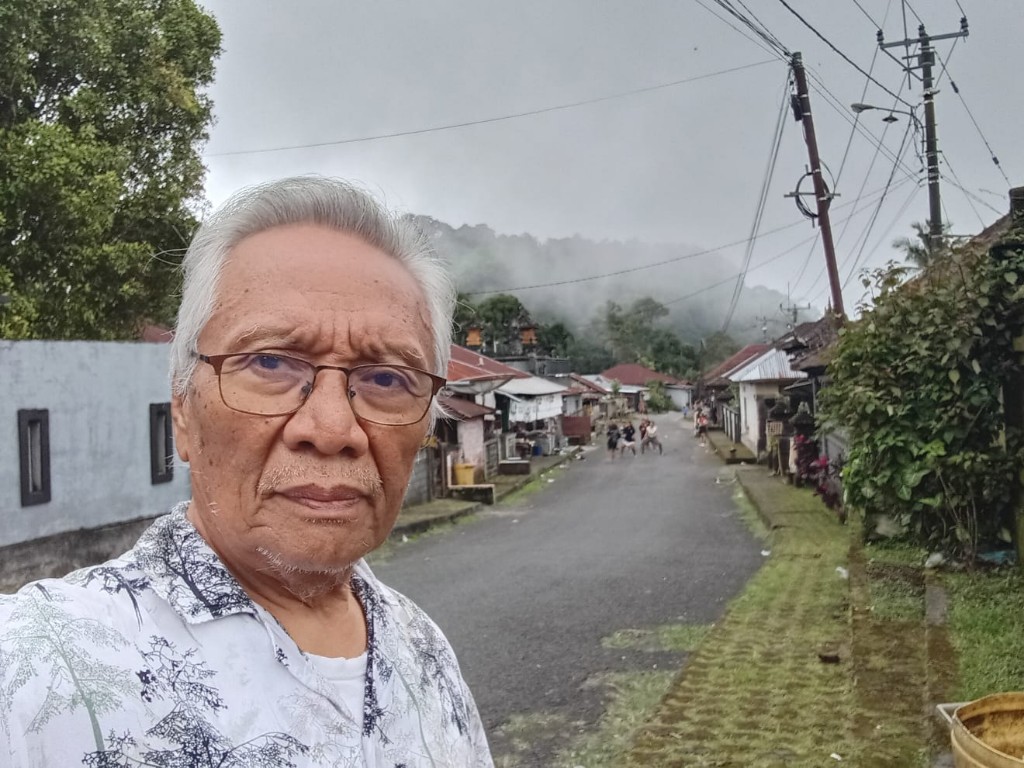
Denpasar (Atnews)—An alumnus of Gadjah Mada University (UGM) and Cornell University, Putu Suasta, praised the leadership of the 15th Prime Minister of India, Narendra Damodardas Modi, who is fondly called Modi, because he was able to restore the history of very historical Hindu civilizations such as Varanasi and Ayodya.
Meanwhile, for Ayurveda, in each state nearly 650 hectares were built as a new civilization for the world community as well as making Yoga an option.
India has 1.2 billion Hindus out of 1.5 billion people. Sanata Dharma becomes a shield for freedom in religion. So that the three approaches of Hindus namely Advaita, Dvaita and Vishista Dvaita are free choices of expression and they are very harmonious.
Its infrastructure development has made the economy of India able to compete on the world stage. On that account, it is time for education to be the choice of young people with IT as their choice.
India has now become a lighthouse for the world which extraordinarily offers young people to go to India. With the recovery after the Covid-19 pandemic, the economy of India grew by up to 13.5 percent in the April-June 2022 quarter.
India as the third largest economy in Asia has experienced an increase in gross domestic product (GDP) from the same quarter in the previous year, reflecting a dramatic increase in economic activity in India since mid-2021.
The country is a member of the G20 as well as a member of BRICS consisting of Brazil, Russia, India, China and South Africa (BRICS). In 2011, the per capita GDP PPP was listed in the International Monetary Fund at $3,703, that made it ranked 127th in the world.
The series of G20 Summits officially ended on Wednesday (Nov 16). In the closing session of the G20 Summit at the Apurva Kempinski Hotel, Badung, Bali, President Joko Widodo handed over the reins of the G20 presidency to India that will hold the G20 Presidency in 2023.
Furthermore, the G20 Summit 2023 with India Presidency will take the theme “One Earth, One Family, One Future.” India will continue the various initiatives produced during leadership of Indonesia this year as contained in the Bali Leaders Declaration.
The G20 Indonesia Presidency with the theme “Recover Together, Recover Stronger” is expected to provide sustainable protection for the environment and food security. Apart from that, Modi is a Hindu nationalist and a member of the Rashtriya Swayamsevak Sangh (RSS).
“He is a Hindu figure who is in the spotlight in India and the world. This can be an example and inspiration for other Hindu youths, especially in Indonesia and Bali,” said Suasta who is also a cultural observer to Atnews in Denpasar, on Friday (Nov 18).
Especially at the G20 event, Modi met Rishi Sunak of Indian descent who became the new British Prime Minister to replace Liz Truss who declared her resignation on his 45th day in office.
Rishi Sunak, who was also the former Minister of Finance during the Boris Johnson era, won the position of British Prime Minister, meeting Modi, and became a conversation in cyberspace. This indicates that Hindu leadership is increasingly global.
It is said that Modi is also the leader of the Bharatiya Janata Party (PBJ) and previously served as Chief Minister of Gujarat from 2001 to 2014. Currently, he is the Member of Parliament for Varanasi constituency.
Modi went down in history as the first Prime Minister born after India gained its independence. To be precise, he was born on September 17, 1950, three years after the independence of India.
Not only once, Modi was re-elected as Prime Minister for the second terms in 2019. As the leader of more than 1 billion Indians, Modi is known for being dynamic, assertive and development-oriented.
Modi is also known to be an avid reader and can spend hours sitting in the library. Little Modi was heavily influenced by Vadnagar, a renowned center for Buddhist learning and spirituality.
Moreover, the son of the couple Modi and Hiraba Modi is also heavily influenced by the books of Swami Vivekananda. That is what caused little Modi to have such a strong drive to make changes in society.
Quoted from official website of India, his party claimed that PM Modi succeeded in breaking poverty in India in a relatively short time. This, according to them, happened due to a series of pro-lower people policies of Modi. Furthermore, Modi also succeeded in making 18,000 villages in India electrified for the first time after 70 years of independence.
Besides, Modi also shows an existence outside of India. This can be seen through the number of awards he already received, including the highest civil award from Saudi Arabia namely Sash of King Abdulaziz Order of Merit, the Order of St Andrew the Apostle the First-Called award from Russia, the Grand Collar of the State of Palestine, the Amir Amanullah Khan Award from Afghanistan and the Seoul Peace Prize from Seoul, South Korea.
Thus, the moment of the presence of the Indian Prime Minister Modi met the Indian Diaspora in Bali on the sidelines of the G20 Indonesia Summit in Bali, on Tuesday (Nov 15) is hoped to further strengthen the relations of Indonesia, especially Bali, and India.
“We have to learn a lot from India because this country is already advanced both economically and politically, spiritually, yoga, in medical science (Ayur Veda) including the center for technology,” added Putu Suasta who is also a political observer.
Good relations of Indonesia have existed from time immemorial, for nearly two thousand years. In 1950, the first President of Indonesia, Soekarno, called on the people of Indonesia and India to “improve the good relations” having existed between the two countries “for more than 1000 years” which had been temporarily “broken” by the European colonial powers.
Meanwhile, in the spring of 1966, the foreign ministers of the both countries started talking again from the era of friendly relations. India has an embassy in Jakarta and Indonesia has an embassy in New Delhi.
India considers Indonesia to be the most important member of ASEAN. The two countries have agreed to form a strategic partnership. Indonesia and India are members of the G20, E7, the Non-Aligned Movement and the United Nations. Besides, India is included in the BRICS.
Suasta learned a lot from India, and has even traveled around the country five times within 30 years. Moreover, he ever lived in holy places for Hindus namely Punjab, Varanasi which is also called Benares, Banaras, or Benaras, or Kashi or Kasi, posing a holy city of Hinduism on the banks of the Ganges located in the state of Uttar Pradesh in Northern India.
Varanasi, for Hindus, is like Mecca for Muslims or Vatican for Catholics. In the meantime, when he was in India, Putu Suasta also associated with saints or sadhus.
The close historical relations between India and Indonesia have been going on for a long time. No less than Ida Bagus Oka Puniatmaja, Deputy Chairperson of Hindu Dharma Council of Indonesia (PHDI), author of many books on Hinduism had confidence that Rishi Markandeya is a prophet for Indonesian Hindus.
Apart from that, there are also other Balinese figures namely Nyoman S Pendit, Ida Bagus Mantra, Mrs. Gedong Oka and Prabhu Darmayasa. Even the relations between Indonesia and India was bridged by Rabindranath Tagore and Dr. SN Subha Rao.
It should also be proud that Prime Minister Modi has just given praise to and gave appreciation to Balinese humanist and art maestro Prof. Dr. I Wayan Dibia who received the Padma Shri Award 2021, an award given to the field of art.
It also included the recipient of the Padma Shri Award 2021 conferred to Agus Indra Udayana (Ida Rsi Putra Manuaba) who inspired the world through the journey of his life in implementing Gandhian Values outside India.
He even built and developed Daridra Narayana of God in the form of marginalized people with the Dash to Diamond project, many young people are born successful.
Through the Indonesia-India Sanggam Program, he built the People to People Preserve Our Heritage, Promoting Our Culture and Connecting People Movement to create cultural bridges for more than 25 years between Indonesia and India.
Hundreds of Shantisena children have been sent to study at Gandhi Puri Ashram in India and thousands have been accepted at Gandhi Puri Ashram through its Vishrama Puri Volunteer Program.
In addition, the construction of Padmasana shrine in India by Ida Rsi Putra Manuaba with Made Mangku Pastika, who is now a Senator of the Republic of Indonesia and former Governor of Bali for two periods in 2008-2018, in Cuttack Odisha and in Rshikesh India bridges the majesty of Indonesian-Indian culture.
The construction of Padmasana shrine in India from the rock of Mount Agung and burial of the Panca Datu (five fundamental metals) and perforated coin bundle (200 pieces) was carried out in India on the Sacred Mountains and Rivers as symbols of civilization.
For this reason, the highest award of Indian Government, the Padma Shri Award 2020, was conferred to Agus Indra Udayana, with the walaka (Brahmin aspirant) name of Ida Rsi Putra Manuaba.
Meanwhile, until now Kalingga Bali Yatra in Cuttack, Odisha, has become a world inspiration where every full moon of Kartika is used as a symbol of cultural glue.
In particular, Suasta also praised Mangku Pastika because before the end of his tenure as Governor of Bali he visited the South Indian, part of Odisha, where the Balinese endek came from. Even, the endek preservation in the region was developed by Utkal University and the National Institute of Fashion Technology (NIFT).
The visit to Odisha was part of an effort to trace the ancestral footprints of the Balinese people who have left a strong foundation for the history of Hindu civilization on the Island of the Gods with the values of burying Panca Datu, which means spiritually burying through the largest temple in Bali, the Besakih Grand Temple in Karangasem District.
Even in marking the awakening of the relations between Bali and Odisha, Mangku Pastika awarded the Padmasana Kalinga Bali Inscription to be placed in the Cuttack Maritime Museum as a place of worship.
The Padmasana Kalinga Bali which was gifted to the Odisha government was not made from ordinary metal or stone, but made from the lava of Mount Agung in Bali, which erupted in 1963. It is said that the lava flow of Mount Agung in the 1963 eruption did not damage at all the body of the temple built by Rishi Markandeya.
Mangku Pastika also gifted the Padmasana inscription to the government of Uttarakhand and it was placed in Rishikesh. These two inscriptions became symbols of the beginning of the revival of the long relations between Bali and Odisha.
In remembrance of the Kalingga people visiting Bali, the Bali Yatra Festival is held every year in the month of Karthi, at the end of October or towards November along the sacred Mahanadi River in Odisha, Northeastern India.
The festival is a celebration of the journey to Bali. Usually during the festival, no less than 80,000 visitors from all walks of life flock to the venue for the Bali Yatra in Odisha, where the Oriya sailors came from.
The Oriya sailors are part of a group of Sadhabas sailors in the Kalinga Kingdom, who in the past sailed to the Islands of Bali, Sumatra, Borneo to Sri Lanka for the expansion of trade, culture and beliefs.
The Bali Yatra Festival is held to commemorate important historical moments and the bravery of the ancestors of Odisha people at that time. There is an interesting ritual ahead of the Bali Yatra Festival. In the ritual performed during Kartik Purnima or the full moon starting from around 04:00 until the sun rises, thousands of people release paper boats decorated with flowers and small candles into the Mahanadi River and other rivers throughout Odisha.
People take turns releasing their paper boats, carrying prayers and good wishes. This indicates strong relations between Bali and India in building a better human civilization towards a jagadhita (happy) and shanti (peaceful) life.
According to Putu Suasta, Indian civilization has existed since 10,000 years ago. The civilization began to form into the Indian nation during the Vedic Period. The basis of Hinduism and the cultural aspects adopted by the Vedic Civilization have survived to the present days. The first kingdoms in India were also founded in the Vedic Period in 1200 BC.
In that era, Hinduism, Buddhism, and Jainism also developed. Meanwhile, modern Indian civilization occurred in 1947 after India got its independence from British colonialism.
Founding father of Indonesia, Sukarno, was much inspired by the thoughts of Swami Vivekananda and Mahatma Gandhi. Mahatma Gandhi is one of the figures who influenced the thinking of Sukarno. Gandhi is known as a figure who taught the concepts of ahimsa, hartal, swadesi, and satyagraha. The concept is a resistance movement carried out peacefully without any resistance.
The nationalism idea of Gandhi, known as humanitarian-nationalism, also inspired Soekarno. In some of his writings, Soekarno often wrote about the struggle of Gandhi. Soekarno also praised the strategy of Gandhi, such as boycotting British trade monopoly products.
Apart from that, at the moment of commemorating the 77th anniversary of Independence of the Republic of Indonesia, it was also reminded that Pandit Jawaharlal Nehru, an Indian figure, played an active role in supporting Indonesian independence.
India was the first country that recognized the independence of Indonesia. It happened because after Indonesia proclaimed its independence on August 17, 1945, the Dutch wanted to return to control of Mother Earth.
On September 2, 1946, Jawaharlal Nehru gave official recognition of the independence to Indonesia. Then in 1949, Nehru sparked the convening of the Asian Conference to gather the strengths of Asian countries against colonialism and imperialism in the Asian region.
It included the relations between Indonesia (Archipelago) and India having started since the Ramayana era, where Yawadvipa (Java island) is mentioned in itahasa, like Ramayana. It is said that Sugriwa, one of the generals of Rama, sent his men to Yawadvipa or Java Island to look for Sita when Ravana kidnapped her.
Indians have visited Indonesia since ancient times, and ancient Indonesians (Austronesian people) have started maritime trade in the seas of Southeast Asia and the Indian Ocean.
Early Indians spread Hinduism and many other aspects of Indian culture including Sanskrit and Brahmi scripts. India already played a big role in Indonesian culture, which is a fusion of Indian, Chinese, Southeast Asian and indigenous Indonesian cultures. Traces of Indian influence are most evident in the large number of borrowed words from Sanskrit in the Indonesian, including Balinese, vocabulary.
The name of Indonesia comes from the Latin Indus, meaning “India”, and the Greek nesos, meaning “island” (due to cultural similarities in these two regions). This name began to be known since the 18th century, far before the formation of independent Indonesia.
During the Sriwijaya era, many Indonesians studied at Nalanda University in India. Indonesia entered a historical period after adopting the Pallawa script and Sanskrit from India as being evident from the findings of several early inscriptions dating from the oldest Indonesian kingdoms such as Yupa from Kutai, the Tugu Inscription from Tarumanagara and historical records of Kalingga.
Hindu-Buddhist patterned kingdoms such as Sriwijaya, Medang, Sunda and Majapahit were the ruling powers in Indonesia, and the classical Hindu-Buddhist era lasted from the 200s to the 1600s with the last remaining Hindu kingdoms in Bali.
Throughout the history of the two countries, most of the relations between ancient India and Indonesia were harmonious and peaceful, but there was one exception when ancient India and Indonesia were involved in war. In 1025 Rajendra Chola, the King Cola of Coromandel in South India, launched a naval attack on the port of Srivijaya and captured Kadaram from Srivijaya and occupied it for some time.
Indonesia has absorbed many aspects of Indian culture since the first contact almost two thousand years ago. The most obvious impact is the absorption of Sanskrit words into Indonesian.
The Ramayana and Mahabharata play an important role in Indonesian culture and history, and are popular among Indonesians to these days. In the Prambanan outdoor theater in Java, Javanese Muslims dance the Ramayana Ballet during a full moon night.
An example of Hindu-Buddhist influence on Indonesian history is the ninth century Borobudur and Prambanan temples.
Apart from that, there are also quite influential historical figures in Bali who learned in India, namely Prof. Ida Bagus Mantra, who was the fifth Governor of Bali, serving for two terms, namely in 1978-1983 (first period) and 1983-1988 (second period).
In his life journey, Ida Bagus Mantra continued his studies at Visva Bharati University Santineketan, West Bengal, India. He earned his master degree in 1954 while his doctorate in 1957 with a dissertation entitled “Hindu Literature and Religion in Indonesia.”
There is also another figure, Prof. Dr. Tjokorda Rai Sudharta M.A. (son of Ubud Royal Palace) who is known as a Sanskrit expert, graduated with a Bachelor of Arts in Sanskrit at Banaras Hindu University and a Master of Arts at Panjab University.
He left several books such as Upadesa (1967), Sarasamuscaya (1976), Slokantara (1982), Asta Brata Dalam Pembangunan (1898), Nasihat Sri Rama Sampai Masa Kini (1990), Ramayana and Mahabrata translated from the author BH. Sarkar (1992), Manusia Hindu Sampai Perkawinan (1993), Bertemu Tuhan di Dalam Diri (2005), Bhagawadgita Dalam Bisma Parwa (2010), Antara Filsafat Yunani Plato dan Filsafat India Upanisad Bhagawadgita (2010).
Suata also stated that western countries had learned a lot from India, and Indonesia had learned a lot from western progress. India is known as a country with fast growing technological advances. In fact, India is often a big market for a number of technology companies.
Apart from being a big market, India also has people who occupy high positions in the international technology giants.
He further mentioned a number of CEOs of Indian descendants in world-famous companies, such as Sundar Pichai (CEO of Alphabet and Google), Satya Narayana Nadella (CEO of Microsoft), Shantanu Narayen (CEO of Adobe Inc.), Parag Agrawal (CEO of Twitter), Arvind Krishna (CEO of IBM) and Anjali Sud (CEO of Vimeo).
Meanwhile, the others are Jayshree Ullal (CEO of Arista Networks), Revathi Advaithi (CEO of Flex), Nikesh Arora (CEO of Palo Alto Networks), Sanjay Mehrotra (CEO of Micron Technology), and Grorge Kurian (CEO of NetApp).
There are also Aneel Bhusri (CEO of Workday), Aman Bhutani (CEO of GoDaddy), Steve Sanghi (CEO of Microchip Technology), Sanjay Metrohtra (CEO of SanDisk), Rajeev Suri (CEO of Nokia), Vasant Narasimhan (CEO of Novartis), Ajaypal Singh Banga (CEO of MasterCard), Sanjay Mehrotra (CEO of Micron) and Laxman Narasimhan (CEO of Reckitt Benckiser Group PLC).
Meanwhile, Prime Minister Modi further added that India and Indonesia shared heritage and cultural ties. “I am talking to you in Bali, we sing traditional Indonesian songs, while Bali Jatra Mahotsav is being celebrated 1500 km from here (in Cuttack, India),” he said.
The Bali Jatra Mahotsav is a celebration of thousands of years of connecting India-Indonesia trade. In addition, his party appreciated the pilgrimage of Rishi Agastya and Rishi Markandeya who traced noble civilizations such as the Indian parampara in Bali.
Many secrets of the Ramayana are hidden in Bali, while now Ayodhya will become the center for Hindu civilization in India. He invited the Balinese people to knit together the great culture in Bali and India to grow in advancing noble human civilization.
Moreover, Mount Agung has a sacred force and directly interacts with Mahameru. (GAB/ART/001)
Baca Artikel Menarik Lainnya : Gubernur Otomatis Jadi Komandan Satgas Darurat Bencana